


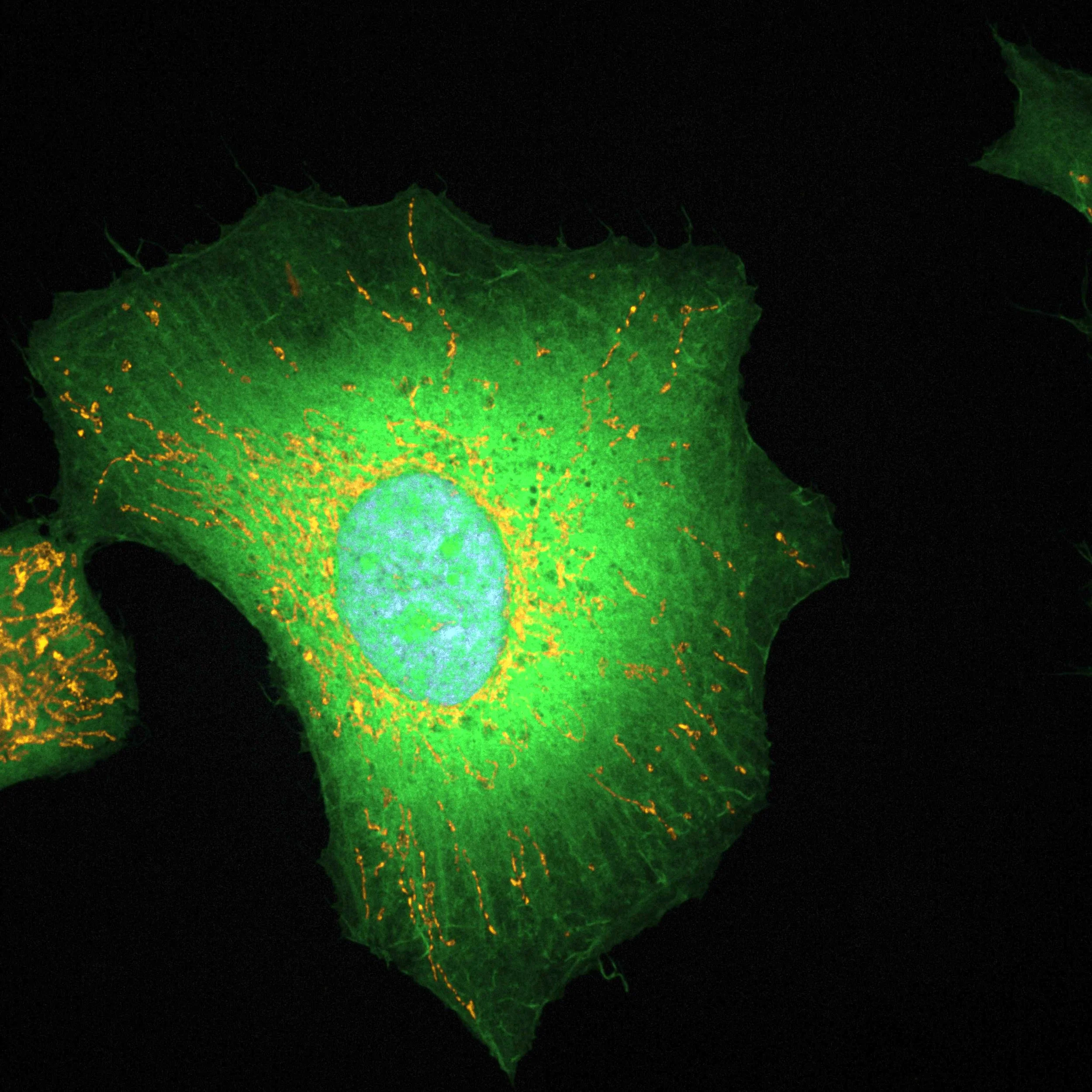

Regulation of Inter-Organelle Communication
The Lim Laboratory studies the regulation of inter-organelle communication, with a particular focus on molecular signal transduction. We are keen to understand how the communication networks within the cell are established through organelle interactions, how signaling molecules and metabolites moving across organelles control essential biological processes, and why the dysfunction of these routes impairs cellular health and contributes to the development of human disease.
Organelle interactions, by a broader definition, may not necessarily be physical but may simply indicate the transfer of information. The way organelles keep in touch with each other is akin to secret conversations inside cells. We are enthusiastic about harnessing genetic perturbation and metabolic engineering to study the interdependence of interacting organelles, particularly in maintaining organelle quality control, dictating compartmentalized metabolism and eliciting adaptive stress responses. In addition, underlying all the routes involved in inter-organelle communication are transcriptional networks that act as a buffer against defects in organelle fitness and may also be subject to regulation in a feedback-controlled manner. Studying organelle interconnectivity is, in essence, a quest of systems biology. A comprehensive understanding of the wiring of organelle networks will reveal how biological systems are built and their emergence throughout evolution. It will provide guiding principles for synthetic biology.
LYSOSOMAL CONTROL OF INNATE IMMUNITY
A central question in innate immunity is how inter-organelle communication coordinates host defense—a process critically subverted by pathogens that hijack cellular compartments for replication and immune evasion. In response, cells deploy a coordinated defense where the lysosome acts as a pivotal hub, integrating metabolic, signaling, and degradative functions to clear invaders via autophagy and phago/endocytosis. To systematically dissect this role, we employ influenza virus infection as a model, combining genetic screening, multi-omics, and animal models to analyze how lysosomes govern immune signaling, cytokine secretion, and protein quality control. We aim to elucidate fundamental principles of organelle-based immunity through a series of studies and to pioneer novel lysosome-targeted strategies for immune intervention.

Our latest study reveals a novel, parallel pathway for interferon (IFN) induction centered on the lysosomal LAMTOR-Rag complex. Distinct from canonical PRR signaling, this axis pre-conditions the IFN response by regulating IRF transcription factor levels and, through FLCN-mediated recruitment, activates a specific pool of p38 MAPK at the lysosome to stabilize Ifnb1 mRNA. By integrating these two essential functions—transcriptional priming and post-transcriptional stabilization—the lysosome acts as a critical metabolic checkpoint, where nutrient-sensing via the Rag GTPase cycle ensures IFN production is matched to cellular resources. This represents an evolutionary co-option of an ancient organellar signaling module for advanced vertebrate immunity (EMBO J, 2026).